Social Change Through Games, Virtual Worlds and Tech Innovation for the April 5th NonProfit Commons Meeting

This Friday, April 5th, Nonprofit Commons is happy to feature Josephine Dorado (Josephine Junot in Second Life) who will report on her recent work leading TechCamp international workshops and webinars for the US State Department on innovation, digital storytelling and leveraging games and virtual worlds for youth engagement.


Bio:

Josephine Dorado is a social entrepreneur, strategist, producer, professor and Pilates instructor whose work focuses on innovation in hybrid online spaces. She was a Fulbright scholarship recipient and initiated the Kidz Connect program, which is a virtual cultural exchange program that connects youth internationally through creative collaboration and theatrical performance in virtual worlds. Josephine also received a MacArthur Foundation Award in Digital Media & Learning, and and continues to be involved with the Fulbright community as an officer of the Board of Directors in NY. She currently teaches at The New School and is the live events producer for This Spartan Life, a talk show inside the video game Halo. She balances her work in online spaces with her passion for teaching Pilates, combining a technology-infused life with a physical, embodied way of being. Most recently, Josephine received the Selma Jeanne Cohen award for scholarly research in dance, recognizing her work using dance frameworks for online collaboration. Commissioned works include interdisciplinary productions for the ISEA and Romaeuropa Festivals as well as speaking engagements at SXSW, IgniteNYC, SIGGRAPH, PICNIC (Amsterdam), and IPZ (Istanbul). Her experience focuses on the convergence of physical with digital, arts with technology, and games with calls to action. She delights in architecting innovative transmedia experiences inspired by the collaborative methodologies behind games and theater.  


Join us in Second Life!


Nonprofit Commons Weekly Meeting

Friday, April 5th, 8:30 AM SLT / PST

Plush Nonprofit Commons Amphitheater

http://bit.ly/NPCinSL


AGENDA

  • 8:30 am Introductions
  • 8:40 am TechSoup Announcements
  • 8:45 am Mentors Central
  • 8:55 am Josephine Dorado (Josephine Junot in SL) Social Change Through Games, Virtual Worlds and Tech Innovation
  • 9:30 am Open Mic / Announcements


http://nonprofitcommons.org


The mission of the Nonprofit Commons in Second Life is to create a community for nonprofits to explore and learn about virtual worlds, foster connections, and discover the many ways in which nonprofits might utilize the unique environment of Second Life to achieve their missions.

Written by: Rhiannon Chatnoir

NPC 3/29/13 Featured Presentation: The Power of Digital Storytelling & Launch of TSdigs Challenge

Below is an edited transcript of the 3/29/13 NonProfit Commons in Second Life meeting, featuring Ale Bezdikian and Michael DeLong, who discussed the annual Digital Storytelling Challenge, the importance of storytelling and highlighted ways to get involved in this year’s campaign.

 – http://www.tsdigs.org


Bios:

Ale Bezdikian

After studying journalism and comparative religion at Cal Poly, San Luis Obispo, Alexandra (Ale) Bezdikian moved to San Francisco and began producing videos forMotherJones.com, as well as fronting their outreach communications department. She has been writing as a free-lance journalist for a few years, publishing in the Armenian Reporter newspaper as well as pro bono for various other niche publications around the Bay Area. Most recently, Ale is the Global Content and Community Coordinator at TechSoup Global where she manages their annual Digital Storytelling Challenge.


Ale is a self-proclaimed non-conformist, and a huge fan of old books, great photographs, graphic novels and visual storytelling.


Michael DeLong

Michael is the senior manager of online community and social media at TechSoup. He enjoys connecting with folks — and connecting them to each other — online. He is particularly interested in how you or your org has used technology effectively. Michael’s background is in communications and he considers himself “tech adjacent” more than a techie so his favorite thing is the story behind the technology. There’s always a human angle behind the bits and bytes


To view the full transcript, go to: https://docs.google.com/document/d/1Bfx7pCggZMcgyT3yWIiqhAXgRIElAT7twAoJF-bZG1M/edit

Slides are available at: http://www.slideshare.net/slideshow/embed_code/17877617


          Rhiannon Chatnoir: Feel free to start whenever you are ready!


alebez: Thanks, Rhi!


Hello, hello everyone! As you may know, I’m Ale Bezdikian and this is Michael DeLong and we’re part of the Global Content and Community team at TechSoup Global. We’re here to talk to you today about our annual campaign called the Digital Storytelling Challenge, but also to discuss digital storytelling more broadly.


It’s that time again!


That time of the year when TechSoup meets digital storytelling and we’re very excited. I made a Vine video about how enthusiastic things have been over here these days. https://vine.co/v/bDBdngxpa5g


Many of you have participated before, and we hope you will again. This year the challenge starts on April 2nd, which is next Tuesday, and will run through April 30th. I’ll get to the campaign in just a few. But first I wanted to discuss storytelling with a wider lens.


We need to ask ourselves, why storytelling?


For me, the most obvious answer is that we are visual creatures. And we love chronicling daily life. Any Instagram feed is testament to that, right? We photograph breakfast, road signs, sunsets, and precious moments in between life happenings.


          Rhiannon Chatnoir: if you are not familiar with vine, it is a iphone/ios app that takes brief, 6-second long videos and allows you to pause/start/stop recording to do a almost stop motion or quick segments recording


alebez: That’s my Instagram profile on the web, and you can see there, a cityscape, sidewalk art shot, my puppy. These are the things that matter to us.


Technology has made it possible to capture and share many of these tender moments in an instant, and oftentimes to a widespread and distributed audience. Many of us have gone mobile to capture and engage with the rest of the social world.


But what we’re talking about today goes a little bit beyond simply uploading a photo to Instagram or a video to YouTube. Although, those platforms should be considered as ways to showcase various components of the work that each of you do.


It’s what we do with those images and individual assets that we’ll talk about today – because we’re talking about digital storytelling more broadly, aren’t we?


Digital storytelling seems to be a buzz word these days. But what does digital storytelling mean in the nonprofit context?


THE STORYTELLER – Digital storytelling goes beyond simply capturing and logging static moments. Because really, it’s what we do with those moments – in this context, the images we string together and share with a purpose – that inspire someone to act.


This sort of storytelling requires there be a storyteller – someone who considers the many images around us, and arranges them in an order that speaks to your audience.


I would encourage you all to think about purchasing a few apps for your smartphone, or to put aside a small budget for a hand-held device/ flip camera type of thing. And take a small, manageable bite out of digital production.


you can start by interviewing your members at your next conference with your phone. You can use data to create stories using free tools. Infographics that become content.


It’s exciting, isn’t it?!


          Rhiannon Chatnoir: yes 🙂

          Buffy Beale: sure is!

          CarynTopia Silvercloud: yes, having documentation of your activities is invaluable


alebez: I want to be mindful to include infographics in this discussion, as they are an emerging digital storytelling medium.


I WOULD ENCOURAGE YOU TO THINK ABOUT WAYS TO:

  • Transform Case studies 
  • Use data driven stories: maps, timelines, charts
  • Member spotlights
  • Mission based stories
  • Conference interviews

With this idea of Building a community of stories in mind.


At TechSoup, we have the Global Local Impact Map – a data driven map of photos, videos, and case studies that showcases impact across our network.


          Andy Evans: Fiction? Non fiction?


alebez: That is left to the storyteller, no? To decide.


Of course we want to educate and equip you with the tools you need to go out there and create a meaningful and effective story using tools that make sense for your need.


Whether that is using Machinima, using voice to narrate in Second Life, or even checking out other storytelling platforms at your disposal, we want you to start thinking about ways you can tell your story IN or WITH Second Life.


Storytelling in Second Life is possible, but somewhat limited. The folks at Linden Lab recently launched two interesting projects that may offer more dynamic storytelling options.


Earlier this year, they released dio – a web-based storyboard platform which allows users to “do something as simple as give you a visual tour of their house, or as complicated as telling an interactive fiction story or game.” Learn more here: https://www.dio.com/


And Versu: http://www.versu.com/ – an interesting choose-your-own adventure app whose goal is to have the social interactions you, as the reader, have with the characters to constantly be changing.


Have any of you heard of or tried these new platforms? Check them out. They look interesting.


          Zinnia Zauber: Yes, and no. But, want to! I like the choose your own adventure format!

          Frans Charming: yes both

          Rhiannon Chatnoir: what did you think of them Frans

          Buffy Beale: so interesting all these new apps coming out

          Frans Charming: Versu on the time trying it, was very limited as it didn’t have creation tools. The small stories allowed you change characters attitudes and behaviours towards each other. It could be interesting, It will need some one who can write well to make something compelling. Dio, is more visual and as such is easier to start in to, as you can just use your pictures to tell about.


alebez: Thanks for sharing, Frans!


          Zinnia Zauber: I thought they would be a great tool to help my video students storyboard their projects.


alebez: I’ll get back to it.


Now this teaser is an example of what I believe what digital storytelling done right looks like. When you have the chance you can watch it at:http://vimeo.com/27310311


This is the story of a Somali refugee named Hawo, who came to the United States and found that her new community in Shelbyville, Tennessee wasn’t welcoming of her and other Somalis. Which lead to conflict.


This particular piece of media was spearheaded by the efforts of a group called Welcoming America, and was meant to open the minds and hearts of community members by emphasizing the beauty of welcoming your neighbor.


          Andy Evans: Beautiful


alebez: Welcoming America created small clips and modules alongside toolkits and discussion guides to serve as education building tools and training resources on how to literally welcome your neighbor. Or make immigrants and others feel more welcome in your community.


If I may read from the description of this particular module to describe the purpose of this digital media – “These modules serve as tools designed to support community leaders – including educators, clergy, law enforcement, public officials and employers – who are helping to integrate newcomers from Muslim majority countries.


It was developed to deepen discussions, break the ice around difficult issues, build-bridges across faith and culture and enhance cultural competency among service providers.”


This is digital storytelling done right.


Here are a few more examples: 


There are opportunities for storytelling all around us. Curating that, and funneling it back to the community you serve ultimately fosters trust and mutual respect between funders, donors, board members, and community members.


Now more than ever, nonprofits need to be able to tell their story digitally. Unfortunately, many lack the confidence, knowledge, or tools to get started, or need a little extra support or incentive to get going.


TechSoup wants to close that gap.


TSDigs combines instruction and friendly competition into a hands-on media making project to fill that hole with resources and education to embark into the digital storytelling space given where you are with capacity.


We hope to include more products used to create digital stories in our lineup of product offerings. Last year’s campaign featured product sponsorships from partners like Flip camera, Flickr, Adobe, and Survey Monkey.


This year, we’re highlighting additional cloud based tools and apps like Zeega, Vine, and WeVideo.


Many of you are TSDigs veterans, and know that during the TSDigs one month challenge, TechSoup hosts a series of webinars and interactive events, live Tweet Chats, and highlights content and tools to help nonprofits produce a 90 second video or a 5 picture Flickr slideshow.


I wanted to point out that this year, we’re allowing up to 90 second videos. Which is different from years past. This year, we’re very excited to include an “emerging media” submission category for organizations using games, mobile tech, apps, or infographics to tell their stories.


          Buffy Beale: that’s a great idea alebez!

          Andy Evans: I hope you will come back with more info as new tools are developed… maybe give us some “homework” to view certain videos too

          Rhiannon Chatnoir: love the idea of storytelling homework 😉  great – would think Second Life would fall under that 🙂


alebez: If you haven’t participated before, don’t worry, now’s the time to start! Our events and resources can guide you through the process of creating a video or 5 photo slideshow.


TSDigs is a teaching event, and created with beginners in mind.


The Challenge exists to give nonprofits a fun way to learn, apply, and gain the tools they need to go out and produce their own digital story, something they then can use regardless if they win.


TSDigs also serves as an opportunity to grow and connect our community and highlight our donation partners, especially those with digital storytelling related tools and products.


With these storytelling resources we aim to inspire action, inspire promotion, and to inspire community.


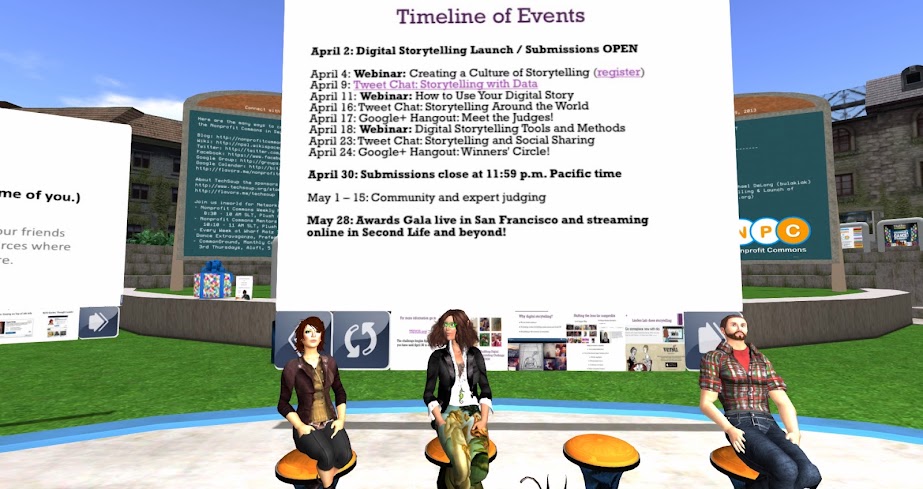
This is the timeline for upcoming events. We have a really amazing lineup of expert guests, judges, and partners. Which I’ll let Michael speak to a bit.


  • April 2: Digital Storytelling Launch / Submissions OPEN
  • April 4: Webinar: Creating a Culture of Storytelling (register)
  • April 9: Tweet Chat: Storytelling with Data
  • April 11: Webinar: How to Use Your Digital Story
  • April 16: Tweet Chat: Storytelling Around the World
  • April 17: Google+ Hangout: Meet the Judges!
  • April 18: Webinar: Digital Storytelling Tools and Methods
  • April 23: Tweet Chat: Storytelling and Social Sharing
  • April 24: Google+ Hangout: Winners’ Circle!
  • April 30: Submissions close at 11:59 p.m. Pacific time
  • May 1 – 15: Community and expert judging
  • May 28: Awards Gala live in San Francisco and streaming online in Second Life and beyond!


          Jen (jenelle.levenque): Are there times listed for the webinars and tweet chats?


bulaklak: Hi! So, I have been very focused on getting the challenge pages ready for public consumption, And they have been quite consuming *me*!


At any rate, as Alebez said, we have a lineup of partners, guests, and events all in the service of sharing the best digital storytelling tips and tools with you as possible. Our first webinar is next week on Thursday at 11am PT. And I am really excited about it. We’re featuring guests from Escondido Library and Global Fund for Women


alebez: As well as Lights. Camera. Help


bulaklak: It’s always exciting to feature folks from real organizations talking to their experiences there


I think experts are great, and we have plenty of those too, but I really enjoy letting folks share their own stories and showing you how you, too, can do this stuff.


          Andy Evans: Do u have a link to the upcoming webinar next Thursday?


bulaklak: yep, Here is the link: http://bit.ly/YGFKiH. Please do register.


          jlmorin: Wow, fantastic storytelling, Alebez! Let’s tweet that. Here’s the tweetable “Creating a Culture of Storytelling at Your Non-profit or Library” link:http://harvardsquareeditions.org/news/ BLAST IT!!


alebez: Awesome sauce.


bulaklak: If you would like any accessibility features such as live captioning, please let us know 72 hours in advance, you can see the whole timeline of events at www.tsdigs.org and links to register for the rest of the webinars will be available soon. Great, thanks Ale!


alebez: No problem. Visit tsdigs.org to check out some of the resources available, but also to enter your own digital story! And do watch another quick Vine video to promo the challenge: https://vine.co/v/bpvYdnpWtBa – come follow the robot and consider participating in some of the exciting happenings planned coming up.


Thanks everyone! This upcoming month should be fun. Stay tuned for more.


          Rhiannon Chatnoir: and last week with the mentors we talked on having a couple of machinima filming workshops here in Second Life, more details to follow on that

          Zinnia Zauber: Super! Thank you guys!

          CarynTopia Silvercloud: Oh, I am very interested in that!


alebez: That would fit in nicely.


          Andy Evans: Very interesting presentation… thanks!

          Rhiannon Chatnoir: message me if you want to help out with that. Any other questions for Ale or bulaklak or on digital storytelling or the challenge?

          Buffy Beale: We’ll have the grand celebration/screening night here in Second Life too right?

          Rhiannon Chatnoir: yes, awards night at our virtual drive in!


bulaklak: Yes!


          Rhiannon Chatnoir: I always look forward to at least one person showing up in a space ship 😉

         Jen (jenelle.levenque): Yay Drive-In

          Andy Evans: hahaha


bulaklak: This year we will have a cool event space at PARISOMA in San Francisco and will do the drive in in Second Life


          Buffy Beale: fantastic

          Rhiannon Chatnoir: great and live video stream for us coming from the venue?


alebez: Yes, we will. We’re also currently producing our first ever international tweetchat across timezones.


          Rhiannon Chatnoir: always a wondeful event both in the physical venue and here

          CarynTopia Silvercloud: all very interesting


alebez: Trying to string together a network of nonprofits, libraries and charities all over the globe, taking on different timezones to speak to various tools, tips, practices in each of their regions. Should be really fun and informative. Thanks for giving us the time.


          Rhiannon Chatnoir: let’s thank Ale and bulaklak for presenting today

          Frans Charming applauds! Thanks Ale and Bulaklak

          Andy Evans: Yay

          Zinnia Zauber: Rah!

Written by: Rhiannon Chatnoir

The Power of Digital Storytelling & Launch of TSdigs Challenge for the March 29th NonProfit Commons Meeting

This Friday, March 29th, Nonprofit Commons is happy to feature Ale Bezdikian and Michael DeLong, both members of TechSoup’s Global Content and Community team, who will discuss their annual Digital Storytelling Challenge, the importance of storytelling for your cause in general, as well as highlighting ways you and your organization can get involved in this year’s campaign.

 – http://www.tsdigs.org


Bios:

Ale Bezdikian

After studying journalism and comparative religion at Cal Poly, San Luis Obispo, Alexandra (Ale) Bezdikian moved to San Francisco and began producing videos for MotherJones.com, as well as fronting their outreach communications department. She has been writing as a free-lance journalist for a few years, publishing in the Armenian Reporter newspaper as well as pro bono for various other niche publications around the Bay Area. Most recently, Ale is the Global Content and Community Coordinator at TechSoup Global where she manages their annual Digital Storytelling Challenge.


Ale is a self-proclaimed non-conformist, and a huge fan of old books, great photographs, graphic novels and visual storytelling.


Michael DeLong

Michael is the senior manager of online community and social media at TechSoup. He enjoys connecting with folks — and connecting them to each other — online. He is particularly interested in how you or your org has used technology effectively. Michael’s background is in communications and he considers himself “tech adjacent” more than a techie so his favorite thing is the story behind the technology. There’s always a human angle behind the bits and bytes!


Join us in Second Life!


Nonprofit Commons Weekly Meeting

Friday, March 29th, 8:30 AM SLT / PST

Plush Nonprofit Commons Amphitheater

http://bit.ly/NPCinSL


AGENDA

• 8:30 am Introductions

• 8:40 am TechSoup Announcements

• 8:45 am Mentors Central

• 8:55 am Power of Digital Storytelling & Launch of TSdigs Challenge

• 9:30 am Open Mic / Announcements


http://nonprofitcommons.org


The mission of the Nonprofit Commons in Second Life is to create a community for nonprofits to explore and learn about virtual worlds, foster connections, and discover the many ways in which nonprofits might utilize the unique environment of Second Life to achieve their missions.

Written by: Rhiannon Chatnoir

NPC 3/22/13 Featured Presentation: Marnie Webb, CEO of Caravan Studios

Below is an edited transcript of the 3/22/13 NonProfit Commons in Second Life meeting, featuring Marnie Webb, CEO of Caravan Studios, a recently launched division of TechSoup Global, focusing on developing and marketing social-benefit projects and software solutions to NGO’s around the world.


Bio: Marnie Webb 

An experienced and passionate leader with a 20 plus year track record of using new technologies to help communities achieve their goals. Currently CEO of Caravan Studios, a division of TechSoup Global. Webb has also played a pivotal role in shaping how the nonprofit sector uses social media and other new technologies as a way to more effectively meet their individual missions and empower advocates to work on their behalf of their collective goals.


Named one of the Top 10 Silicon Valley Influencers by San Jose Mercury News, Webb is a sought after writer and speaker on innovation, community, and the social web. She may be best known for launching NetSquared, an ambitious and evolving global experiment that empowers developers and organizers at the local level to build and share innovative solutions to social challenges. Now six years old, NetSquared has an active community of more than 24,000 individuals around the globe and hosts regional meetups in 23 countries. Webb also writes the blog, Caravan Studios, and is the initiator of the NPTech tagging experiment. In 2008, she won NTEN “Person of the Year” award and was included in to the Nonprofit Times’ list of the 50 most influential leaders in the U.S. nonprofit sector.


          Glitteractica Cookie: and my awesome boss!

          Rhiannon Chatnoir: Let’s welcome Marnie , and start whenever your ready!

          Beth Ghostraven: This chat is shared at https://docs.google.com/document/d/1ivn2RJ1xE4tylaeaGebwNah6_lSfqQC0izsokci0QhQ/edit?usp=sharing

          bulaklak Resident: hehehehe


MarnieWebb Resident: Hi. and thank you.


So, I’d like to talk with you to today about Caravan Studios a new division of TechSoup Global. (you’re all going to get a birdseye view of the homophones i mistype regularly)


John Cleese has a wonderful video on creativity. i really recommend that you spend 40 minutes watching it. it’s very worth it.


But there’s one bit that I particularly love. he talks about the idea that creativity happens when we have been resting our mind against a problem. so john cleese talks about creativity happening because we’ve been resting our mind against a problem and, at techsoup, we’ve been resting our collective minds against the problem of nonprofits and technology for 25 years. And that has lead us a lot of interesting places.


I don’t just want to share what we’re doing at Caravan. i want to step back a little a share some of the thinking that got us there


So, there’s a political writer from the 60s, td weldon, who said, and i’m paraphrasing, “there are issues and there are problems.” Issues are big systemic things that can’t be fixed, a lot of things like hunger, like poverty. Then there are problems, things within those issues that can be fixed and those are things that move or change the issue. They may be things like more shelters for people who are in dangerous situations. When we think about tech in social benefit, we’ve been thinking about it in that way. So, we believe that technology can be used to illuminate issues


There’s a group called apalachian voices that does just that, with a site called i love mountains: http://ilovemountains.org/. Put in your address and it shows the mountaintop that’s been removed by your power consumption. As in the actual mountaintop that’s affected by your power companies purchase of power


Tech can also be used to identify problems. See Click Fix: http://seeclickfix.com is a good example of that. it can let you find the things in your community that can be fixed and tech can be used to allow for action on the problems. Ushahidi is another great example, there after the disaster in japan they produced a site that helped people locate things like clean drinking water.


So we’ve been bumping against this way of thinking about technology via netsquared.org and our smart board members.


This quote is from caterina fake, one of the founders of flickr.com. I love it because she talks about the all work we did to make the web big. To make it easy to publish and share and all that publishing and all those tools that helped make the web big forced us to get good at search and adding metadata for tags. And now we’ve got to get good at making the web smaller.


This (NonProfit Commons in Second Life community) is a place to gather with likeminded individuals and we know that the people here care about some of the same things we do. More human-scaled. If i had to stumble my way through all of Second Life to find these individuals, i would be lost. But i can come here, to a place in second life.


Local is one way of making the web smaller and it’s a way we see a lot. And there are other ways…the increasing modularization of technology, the ubiquity of the tools. All of that helps us to make the web smaller and we can even carry it around with us.


And that leads us here. We need to stop thinking about the web. We need to think about what people need in specific spots; to illuminate issues, to idenity problems, to take action on problems and we need to build those things.


When i say we in these slides, i mean those of us helping build the capacity of the sector. We’ve adopted platforms, like this one and now we have to build things on those platforms


So, here we are. We’ve gotten big in various ways and we see that we have an opportunity to build more specific, more precise tools but we want to do it in a way that makes sense, with this idea of issues and problems that i talked about early.


And now we’re at Caravan Studios. We want to make the things so technology, so the connections of the internet are more precise and more actionable for the social benefit sector and help to make sure it actually gets to NGOs. We want to take the energy that goes to this sector. 


We’ve starting with something called the public good app house (there’s no url yet or i’d share it). We want to take the best of the code that comes out of places like hackathons, like corporate volunteering, like university projects and we want to work with the people who volunteered their time to develop it to get it done and then get it out to the communities and the organizations that can best use it.  


We’ve got a lot to figure out to make this happen, so we’re starting small about what they wish still worked. We are reaching out to hackathon organizers and talking to them. What came out of their event, but couldn’t get done or stopped working because some piece of the world changes, like twitter changed their api. Or a phone upgraded and there was no one to take care of the thing that got built. We want to take care of it. We’re also looking for specific communities that we can work with to build things that will help them.


Safe Night: http://www.slideshare.net/caravanstudios/safe-night-overview is an example of that


Safe Night is a mobile service that allows domestic violence organizations to crowdsource funds to cover hotel room stays when no shelter space is available. We’re building it courtesy of grants from Microsoft, Vodafone Americas foundation and Blue Shield of California foundation. And in concert with domestic violence service organizations in the state of California picking and choosing apps. We know we can do this at a small scale, but we want to understand what we need to do to do it at a larger scale.


          Sarvana Haalan: awesome!!

          Lowri Mills: Wow!

          01 Hifeng: interesting project, wow


MarnieWebb Resident: How do we need communities of engineers involved helping us vet the technical quality of the products? How do we get change agents to tell us what works for them? How do we do it in a way that allows other people to bring their ideas to the sector without ever talking to us?


There’s a lot to think about with regard to sustainability and rather than mud wrestle a thousand excel spreadsheets, we’d rather figure it out by producing things, sharing them and getting feedback, (we’re excited about safenight and would love to hear more of what you think)


Can you go the end of the deck, the slide with my tweet on it?


If you look at this deck on SlideShare: http://www.slideshare.net/caravanstudios/caravan-studiosoverview-tsgstaff, you’ll see that we’ve got some of the things we have to think about with regard to sustainability on it and if you think of others we’d love to hear them.


So here’s the thing about this and the other documents we’re sharing. This right here: that we’re learning at a great rate of velocity is what i love about my job. Every conversation, every meeting results in use getting new things to add into the hopper and it’s wonderful. It lets us refine and get more precise. But the “to do next” list is growing and growing. But here’s what it means for all the documents that we are producing; the grant proposals, and excel spreadsheets, and slide decks. It means by the time we hit share we’re probably already wrong.


One of the big reasons I wanted to share with this community, with all of you here, is being i think you can help inform us. Tell us the places that resonate and the places that don’t. Tell us where we can find more things and even more. I hope we can do some of this work together.


Thanks for giving me some time on your agenda. Super happy to answer questions here, but you can also reach out to us in all the usual ways: @caravanstudios, webb@caravanstudios.org, @webb, thanks.


          Namaara MacMoragh: thank you Marie for being here today 🙂

          Robo Mirabella: brava!!!

          Frans Charming applauds

          Zotarah Shepherd claps

          Glitteractica Cookie: applause

          bulaklak Resident: that was great!

          Buffy Beale: hearty applause!!

          CarynTopia Silvercloud: thanks, I applaud ways in which to work together

          jlmorin Resident: yay

          Beth Ghostraven: Yes, thank you so much for sharing this, Marnie!

          jlmorin Resident: applause


          Lowri Mills: Is there a place where shelters can share their space available in different communities?


MarnieWebb Resident: Lowri, domestic violence shelters don’t share space like that. Their locations are typically kept extremely secure.


          Lowri Mills: Yes, I have worked as an advocate for years. You can use their criteria for you website or the police stations they could call,


MarnieWebb Resident: Lowri, we’re looking a that for the second phase


          Serene Jewell: Sounds like a great project.

          Lowri Mills: Excellent project


          Buffy Beale: Question: Why did you pick the name Caravan, just curious


MarnieWebb Resident: Buffy, i love the idea of people coming together of traveling of spending time in a place and a caravan, for me, a caravan represents that. Plus, i like the way it sounds. Good, simple answer.


          Buffy Beale: and the Nonprofit Commons are now under Caravan Studios so that’s a great fit

          Glitteractica Cookie: yes, super happy that caravan is running NPC

          Rhiannon Chatnoir: yes


          Oronoque Westland: Is the idea that NGO’s bring suggestions to Caravan studios for Caravan to run with, or do the NGO’s reach out to Caravan for funding to so their own development?


MarnieWebb Resident: Oronoque, we want NGOs to tell us what’s hard in their job and what stops them and then we can work with them to come up with solutions. We’d bring those to volunteers to help get them done. We’re looking at things like hackerhelper: http://hackerhelper.wikispaces.com, to organize the information. But that’s a part we want to get better at. We don’t want to get in the way of orgs who can own their own tech. We want to help make things that a lot of orgs could use. Thanks, all for the feedback. i hope you’ll keep it coming as we continue this work.


          Serene Jewell: When it comes to things like hackathons and app development, I think it is important to build in tools for follow up and sustainability of the projects. Glad to see you are thinking about those things.


MarnieWebb Resident: Serene, we are but we’ve got to get better at how it happens. What i’d love is to be able to do community adoption projects so that we go into a place and help them use the tools in the way that make the impact they are looking for a lot for us to learn there


          Ozma Malibu: how do you want us to bring you the ideas? cos I know we each are thinking about our individual problems having to do with the issues we are committed to.


MarnieWebb Resident: Ozma, you can email them to us, tweet them at us or use the hackerhelper wiki: http://hackerhelper.wikispaces.com


          Rhiannon Chatnoir: so beyond being involved with the hacker helper wiki, what are other good ways for those here at NonProfit Commons to plug in to this


MarnieWebb Resident: to describe the issue? I’d ask you all that question actually. How would you like to be involved? How are you already involved? So, one of the things you all could do (just an example) is share the info on the hackerhelper wiki with local hackathons.


          Glitteractica Cookie: just a show of hands, say AYE if you are a person that goes to hackathons. Can you all shout out if you go to hackathons?

          Sarvana Haalan: I do in Baltimore, MD

          Lyre Calliope: Aye!

          Rhiannon Chatnoir has

          Ozma Malibu: just once (to a hackathon)

          Glitteractica Cookie: that’s four of you so far

          Sarvana Haalan: Woot

          Serene Jewell: yes, have done

          Sarvana Haalan: awesome


          Lowri Mills: This is a global application?


MarnieWebb Resident: Lowri, you mean safenight?


          Lowri Mills: yes, I work with people around the world


MarnieWebb Resident: lowri, the pilot will be in CA and then we’ll work on brining it to other states. I think we need to look at the way the issue manifests in certain countries, to be sure that it’s appropriate there.


          Lowri Mills: I was thinking also countries, This would work well in many countries and is needed. I have found most countries work well cross culturally.


MarnieWebb Resident: (I just mean, if there isn’t a safe way fo getting to hotels or there aren’t laws that help with that safenight could hurt). We’d very much like to take it to other places. We just want to be able to well-describe what it does. Anyone can also follow up with me at webb@caravanstudios.org


          Glitteractica Cookie: Just started following you on twitter, Lowri, so we can stay in touch


MarnieWebb Resident: Lowri, maybe we can follow up with a phone call?


          Lowri Mills: Great! I must go, but great job! I will send you my info

          Glitteractica Cookie: I got her contact info, will set it up

          Glitteractica Cookie: I got it from your SL profile


          Rhiannon Chatnoir: any last thoughts for Marnie? great, let’s thank Marnie then for coming to introduce Caravan to us

          CarynTopia Silvercloud: look forward to continuing conversation

          Buffy Beale: just to say thanks for coming and how much I appreciate that the Nonprofit Commons is still going strong thanks to the support from Techsoup

          Glitteractica Cookie: we’ve been in world since 2006

          Gentle Heron: Thanks Marnie

          Serene Jewell: Thanks for doing this, it could be very powerful.

          Zotarah Shepherd: Thank you Marnie!

          Ozma Malibu: This was great – inspiring and thoughtful – thanks for sharing

          Buffy Beale: and… a fine example of how we connect just happened again today

          Rhiannon Chatnoir: yes

          Buffy Beale: a meeting with Lowri resulted, who knows where it could lead 🙂


MarnieWebb Resident: thank you all for giving me the time today.


If you took pictures during the event, please share them on our Facebook group: https://www.facebook.com/nonprofitcommons or G+ Community: https://plus.google.com/communities/114212078390326305687, that would be great. Otherwise, tag them #NPSL


And tag your avatars in any photos posted!

Written by: Rhiannon Chatnoir

Marnie Webb, CEO of Caravan Studios for the March 22nd NonProfit Commons Meeting

This Friday, March 22nd, Nonprofit Commons is happy to feature Marnie Webb, CEO of Caravan Studios, a recently launched division of TechSoup Global, focusing on developing and marketing social benefit projects and software solutions to NGO’s around the world. 


About Caravan Studios

Caravan Studios believes in the power of community. Whether you define community by geography, by a shared desire for change, or by a common set of skills, they work to deliver projects that are aligned with needs and make real change.


Caravan Studios does this by listening through action: Creating and delivering the resources necessary for technology planning and implementation; organizing community needs in tools like the Hack for Good README Guides (http://hackerhelper.wikispaces.com), and by engaging deeply with issue areas over time.  


Bio: Marnie Webb   

An experienced and passionate leader with a 20 plus year track record of using new technologies to help communities achieve their goals. Currently CEO of Caravan Studios, a division of TechSoup Global. Webb has also plays a pivotal role in shaping how the nonprofit sector uses social media and other new technologies as a way to more effectively meet their individual missions and empower advocates to work on their behalf of their collective goals.


Named one of the Top 10 Silicon Valley Influencers by San Jose Mercury News, Webb is a sought after writer and speaker on innovation, community, and the social web. She may be best known for launching NetSquared, an ambitious and evolving global experiment that empowers developers and organizers at the local level to build and share innovative solutions to social challenges. Now six years old, NetSquared has an active community of more than 24,000 individuals around the globe and hosts regional meetups in 23 countries. Webb also writes the blog, Caravan Studios, and is the initiator of the NPTech tagging experiment. In 2008, she won NTEN “Person of the Year” award and was included in to the Nonprofit Times’ list of the 50 most influential leaders in the U.S. nonprofit sector.

Join us in Second Life!


Nonprofit Commons Weekly Meeting

Friday, March 22nd, 8:30 AM SLT / PST

Plush Nonprofit Commons Amphitheater

http://bit.ly/NPCinSL


AGENDA

  • 8:30 am Introductions
  • 8:40 am TechSoup Announcements
  • 8:45 am Mentors Central
  • 8:55 am Marnie Webb, CEO Caravan Studios
  • 9:30 am Open Mic / Announcements


http://nonprofitcommons.org


The mission of the Nonprofit Commons in Second Life is to create a community for nonprofits to explore and learn about virtual worlds, foster connections, and discover the many ways in which nonprofits might utilize the unique environment of Second Life to achieve their missions.

Written by: Rhiannon Chatnoir

NPC 3/15/13 Feautured Presentation: Jim Lynch on Humanitarian Electronics Recycling and Refurbishment

Below is an edited transcript of the 3/15/13 NonProfit Commons in Second Life meeting, featuring Jim Lynch.

Today for our featured presentation we have Jim Lynch, Director of GreenTech for TechSoup Global.

Bio: Jim Lynch, Director of GreenTech, TechSoup Global 

Over his long career at TechSoup Global, Jim Lynch has been involved in creating all of TechSoup’s environmental programs. Mr. Lynch leads TechSoup Global’s work to develop the computer refurbishment and reuse field in the United States and internationally. He has provided testimony on the humanitarian portion of the field to the U.S International Trade Commission. He has also participated in the creation and refinement of standards for the U.S. electronics recycling industry.


Mr. Lynch also directs TechSoup’s GreenTech program, which promotes technology and practices that reduce the IT environmental impact and carbon footprint of nonprofits, NGOs, and libraries worldwide.


Jim Lynch designed, in cooperation with Microsoft, the Community Microsoft Authorized Refurbisher Program for the Americas, which distributes low-cost Windows and Office software to recyclers and refurbishers. In 2005 he also started TechSoup’s Refurbished Computer Initiative, which supplies low-cost warrantied refurbished computers to U.S. nonprofits and libraries. His interest in computer recycling and nonprofit social enterprise began when he created and ran homeless education programs and computer training labs in the 1980s


Jim Lynch has been interviewed extensively over the years on computer recycling and related issues by the Wall St. Journal, National Public Radio, PC World Magazine, and many other news outlets.

You can start when you are ready Jim


          Glitteractica Cookie: And he’s been at TechSOup longer than I have! How long, Jimmy?


originaljimlynchHappy Ides of March everyone! I’m originalJimlynch (Jim Lynch in the straight boring world), and this is my 1st time on 2nd Life. I’m TechSoup’s Green IT guy.


Let’s see I’ve been toiling away at Techsoup lo these 17 years


First off let me apologize for this presentation. It’s the one I presented (verbatim) to members of the U.S. House of Representatives Committee on Science, Space, and Technology on February 13th this year. The briefing was called “Turning E-Waste into Green (as in cash)”. It turned out that this was a briefing mostly for new members of the committee to get them up to speed in this environmental issue


The policy folks from the American Chemical Society invited me to present to Congress on “U.S. E-Waste Environmental Policy”. The American Chemical Society is a big trade association for chemists and chemical companies. They asked me to the dance because TechSoup has been a staunch advocate for electronics recycling and especially reputable refurbishment and reuse for 10 years now. It’s the grand missionary passion of my life.


Slide 2

You all probably know all about TechSoup Global’s mission to do whatever we can to provide the IT resources and knowledge that charities, NGOs, and libraries need. It’d be silly to reiterate that! What’s far less known is that we’ve long had an environmental mission to reclaim a bunch of the electronics out there that are getting wasted in our throw-away societies. The UN estimates that less than 10% of the world’s discarded computers and mobile phones are getting recycled in any way.


          Jimbo Welles: (great school project would be a consistent collection of these items)


originaljimlynchGreat idea, Jimbo. Lots of schools do stuff around this type of recycling


It’s actually not our first time advocating for charities and libraries in high places like the U.S. Congress. Our Susan Tenby testified a few years ago on behalf of 2nd Life. When I got the invitation I decided to go for it – to make an appeal for “humanitarian electronics recycling and refurbishment.” Perhaps I should explain.


Slide 3

This is just the list of the stuff I covered in the 10 minute presentation


Slide 4

Don’t you hate it when people just read thru a presentation?

“Discarded electronics devices are one of the fastest growing parts of the solid waste stream.” 


“About 27% of discarded electronics are recycled nationwide”


          Komi Silverfall: why are such a low amount of electronics being recycled? Can’t they be reused?


originaljimlynch: Ah, reuse. We’ll get to that…


Our 27% recycling rate is up 9 percentage points from 2008, so at least in the U.S. we’re making some progress. Any idea which country has the highest recycling rate?


South Korea (85%) followed closely by Japan and Taiwan (both at 75%)


          Gentle Heron re-asks Komi’s question: Why is the US so lagging in recycling electronics?


originaljimlynch: Any idea of the lowest?


          Komi Silverfall: Africa

          Jen (jenelle.levenque): UK

          Jimbo Welles: its a space issue- USA has lots of space for landfills

          Panny (panny.bakerly): Money?


originaljimlynchA large share of the world is down around 1% – all of Africa and much of Latin America and Asia.


Why is the US lagging places like Korea? 


Slide 5

This summary of what U.S. electronics recycling policy is composed of was the hardest part of this to boil down


The patchwork of 25 state laws – is obviously half the country, but it’s the big populous states. The problem is that all the state laws are different. Most state laws use the ‘Extended Producer Responsibility’ model


I think you’ll see in all this that the policy stuff is kind of a mess and Congressional gridlock is basically why we don’t have a unified collection system like Japan and Europe.


          Jimbo Welles: “the USA right to pollute” also- and to buy, use, throw away

          Komi Silverfall: November 15 was America Recycles Day, and a great reminder about how important recycling is not only for the environment, but for jobs and the economy as well.

          Jimbo Welles: yes


originaljimlynchThe jobs thing – that was mainly what the folks in Congress wanted to hear about


Marching on: The 2011 National Strategy for Electronics Stewardship – this is an Obama administration policy to push on the recycling industry to adopt environmental standards voluntarily and for the Federal government to buy energy efficient IT equipment, and encourage better designed electronic devices that are easily repaired and easier to recycle (called demanufacturing)


The Federal Sustainable Materials Management (SMM) Electronics Challenge – this is the latest US EPA initiative aimed at original equipment manufacturers (OEMs) and retailers to use certified recyclers. OEMs are on the hook in most states with laws to cover the takeback costs of recycling. The government doesn’t want them to take shortcuts by using cheap or disreputable recyclers


The R2 (Responsible Recycling) and E-Stewards certification programs – These are dueling recycling standards. R2 is the EPA initiated and largely industry-oriented stakeholder one that is now led by the industry trade association called ISRI. E-Stewards is the environmentalist led standard that prohibits exports of e-waste to most of the world. It is led by the environmentalist organization, Basel Action Network (BAN) in Seattle. Both standards are recognized by the Obama administration as being reputable.


Innumerable local, state, and federal environmental regulations – these are mostly landfill bans – the precursor to recycling laws. It turns out that municipalities are left with most of the costs to dispose of or to recycle all types of stuff that is thrown away, and that money comes from garbage collection, landfill and ‘tipping fees’.


The upshot of all this: There is no Federal law regulating electronics disposal and material recovery.


The latest effort was the 2011 Responsible Electronics Recycling Act (HR 2284 / S1270) – this bill failed in the last Congress. It will probably be reintroduced, but has little chance of getting to a floor vote in the Republican led House. It is mainly the policy position of the E-Stewards oriented environmentalists.


          Jimbo Welles: could a municipality actually make money collecting recycleable tech?

          Gentle Heron: Jimbo, the better question is: Would the recycling income be more than the cost of running the recycling program, or less than the cost of trashing the stuff?


originaljimlynch: Jimbo great question – it’s a loss unless there’s a law that subsidizes it. A scrapped computer that is ground down in to metal plastic and glass is worth about $3


The better money is in repairing and reusing this stuff – way more


          Jimbo Welles: nods. show us how!

          Komi Silverfall: In the U.S., 40-50 percent of raw materials come from recycled scrap. And although businesses make up a large amount of scrap recycling in general, recycled precious metals come in large part from consumer electronics.

          Jimbo Welles: bingo

          Jimbo Welles: and the jobs stay HERE


originaljimlynch: Nice! I didn’t know that stat.


Here’s a bit more about how the money works in this field: Slide 6 General Industry Characteristics


1,500 end-of-life electronics recycling companies in the US (I call them shredders)


1,400 IT asset disposal and refurbishment companies – 30% are noncommercial (Microsoft Registered Refurbisher Program)


The industry has two sides:

  –  End-of-life processing – the largest company is Sims Recycling Solutions

  –  IT Asset Disposal and Refurbishment – the largest company is Arrow Electronics


Most of the larger electronics recycling companies and refurbishers are now certified under R2 or E-Stewards – mostly R2 by around a 3 to 1 ratio


Because of persistent press about foreign e-waste dumping, the industry is eager to be reputable


Here’s the jobs bit: Job Creation Potential. It is a relatively high wage industry. Electronics recycling and refurbishment jobs tend to stay in the country and are regarded as green jobs. In the U.S., repair and refurbishment of electronics can create 200 times as many jobs as landfilling.


          Jimbo Welles: can the costs be sustained by the income generation?  ie. can a company make money on it


originaljimlynch: Repair and refurbishment creates around 10 times more jobs than shredding which relies on big machines


Companies do make money. Shredders need big volume though. The bottleneck in all this is that we’re bad at doing collections, Less than 10% of discarded cell phones are collected here in the US


Here’s the NPC angle: Slide 7 – Humanitarian Electronics Recycling and Refurbishment is the sweet spot for us


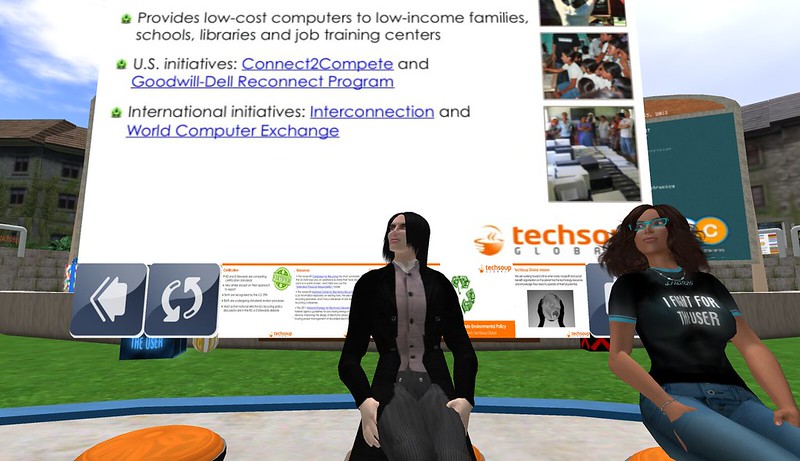
The industry is also active in providing low-cost computers to U.S. low-income families, schools, libraries and job training centers – the largest is Connect2Compete, but there are hundreds of others.


The Goodwill-Dell Reconnect Program has around 2,600 collection locations. Twenty-three entire states now covered, and 17 partial states are covered. It is mainly a free collection program for consumer electronics and collects several million pounds of electronics per year. It essentially offers free R2 or E-Stewards processing. Each Goodwill collection program is able to divert a portion of its collection for reuse and resale.


The Microsoft Registered Refurbisher Program provides very low-cost Windows and Office licensing to encourage this digital inclusion work. TechSoup worked with MSFT to develop that program in the early roaring zeroes (early 2000s)


These guys are my big heroes: U.S. based nonprofit programs like Interconnection in Seattle and World Computer Exchange in Boston are showing the way toward responsible export to many developing countries, mainly to schools in Latin America and Africa. Schools there badly need and want good used IT equipment. There are plenty of cheap (mostly Chinese) cell phones in places like Africa, but schools and NGOs there really want affordable laptops.


We advocate for a national law that is like the one in Illinois. It is notable because it has incentives for routing appropriate discarded electronics toward refurbishment, which is a higher form of recycling than material recovery, and would greatly increase the supply of good used IT equipment to charities, schools, libraries, and low-income families in the US and elsewhere.


          Jimbo Welles: but eventually they need to be recycled somehow

          Widget Whiteberry wonders about practices in California …. given the size of the state, good practices in CA could have an impact.


originaljimlynch: I think the install base on PCs is currently 1.2 billion and cell phones around 5 billion in use. 90% are not recycled in any way


Slide 8

I think I covered the certification rivalry between R2 and E-Stewards. I expect that within the next couple of years they’ll end up merging to become a single world standard. These voluntary standards tend to be a stepping-stone toward creating a proper recycling system. About 35 countries in the world have national recycling systems and the rest of the 160 odd countries don’t have systems, most notably China and India, and even the US and Canada. We’ll be participating in an event in June to introduce them to the African industry.


Slide 9: Resources: Probably the single best one to look at is the nonprofit National Center for Electronics Recycling (NCER)


That’s me if you wanna chat more about all this


          Glitteractica Cookie: but you could also just email community@techsoup or nonprofitcommons@techsoup and one of us will fwd to jim

          Rhiannon Chatnoir: great, any questions for Jim?

          Buffy Beale: Question: Is there anything we nonprofits can do to help the cause?

          Widget Whiteberry: Question: Have you looked specifically at California?


originaljimlynch: Yes! There’s a group we’re part of called the Electronics Takeback Coalition


          LoriVonne Lustre: Very informative. A world standard is needed.

          Komi Silverfall: how does the organization thrive if their is no profits coming in??

          Glitteractica Cookie: Question: which is the most reliable company to recycle phones? I am always a little dubious of those dropboxes in shopping malls that offer you money for your used phone. is that real and would it be recycled?


originaljimlynch: Great question. There’s lots of scamming still in charity cell phone recycling. The biggest and most reputable company doing it is called Recellular


Thanks for having me here in 2nd Life finally!


          ray2009 Hazelnut: What about electronic bits that don’t work anymore, TVs, watches, radios?


originaljimlynch: The little bits… a huge question I don’t think I can type fast enough.


          Rhiannon Chatnoir: more than happy if you want to add any extra information to post to our NPC blog

          Jimbo Welles: (you are doing fine Jim)

          Rhiannon Chatnoir: Yes, great that you could come into SL to join us all and thank you for your presentation

          Buffy Beale: hearty applause! Thanks Jim and look forward to the day it’s a world standard

          Jimbo Welles: keep fighting the good fight Jim!

          Zinnia Zauber: Thank you for joining us, Jim!

          Glitteractica Cookie: thx Jim!

          Namaara MacMoragh: thank you

          Beth Ghostraven: yes, thanks!

          Gentle Heron: Great information Jim.

          LoriVonne Lustre: ~~~applause~~~

          Namaara MacMoragh: *applause*

          Glitteractica Cookie: Applause!!

          Jen (jenelle.levenque): APPLAUSE. Thanks Jim

          CarmenLittleFawn: APPLAUSE


originaljimlynch: My humble thanks. (bows)


If you took pictures of this event, please share them on our Facebook group: https://www.facebook.com/nonprofitcommons or G+ Community: https://plus.google.com/communities/114212078390326305687, that would be great. Otherwise, tag them #NPSL


And tag your avatars in any photos posted!

Written by: Rhiannon Chatnoir

TechSoup Global Goes To Congress (Again): Humanitarian Electronics Recycling and Refurbishment for the March 15th NPC Meeting

This Friday, March 15th, Nonprofit Commons is happy to feature Jim Lynch, Director of GreenTech for TechSoup Global. It’s not our first time advocating for charities and libraries in the hallowed halls of the U.S. Congress, but this time, Jim Lynch has created a catch phrase that he hopes will capture some hearts and minds of policymakers. He calls it “humanitarian electronics recycling and refurbishment”. Find out what he said to policymakers on behalf of the digital divide.

http://www.techsoupglobal.org/blog/need-humanitarian-computer-refurbishment-and-reuse

Bio: Jim Lynch, Director of GreenTech, TechSoup Global  

Over his long career at TechSoup Global, Jim Lynch has been involved in creating all of TechSoup’s environmental programs. Mr. Lynch leads TechSoup Global’s work to develop the computer refurbishment and reuse field in the United States and internationally. He has provided testimony on the humanitarian portion of the field to the U.S International Trade Commission. He has also participated in the creation and refinement of standards for the U.S. electronics recycling industry.

Mr. Lynch also directs TechSoup’s GreenTech program, which promotes technology and practices that reduce the IT environmental impact and carbon footprint of nonprofits, NGOs, and libraries worldwide.

Jim Lynch designed, in cooperation with Microsoft, the Community Microsoft Authorized Refurbisher Program for the Americas, which distributes low-cost Windows and Office software to recyclers and refurbishers. In 2005 he also started TechSoup’s Refurbished Computer Initiative, which supplies low-cost warrantied refurbished computers to U.S. nonprofits and libraries. His interest in computer recycling and nonprofit social enterprise began when he created and ran homeless education programs and computer training labs in the 1980s

Jim Lynch has been interviewed extensively over the years on computer recycling and related issues by the Wall St. Journal, National Public Radio, PC World Magazine, and many other news outlets. 


Join us in Second Life!


Nonprofit Commons Weekly Meeting

Friday, March 15th, 8:30 AM SLT / PST

Plush Nonprofit Commons Amphitheater

http://bit.ly/NPCinSL


AGENDA

  • 8:30 am Introductions
  • 8:40 am TechSoup Announcements
  • 8:45 am Mentors Central
  • 8:55 am Jim Lynch: Humanitarian Electronics Recycling and Refurbishment
  • 9:30 am Open Mic / Announcements


http://nonprofitcommons.org

The mission of the Nonprofit Commons in Second Life is to create a community for nonprofits to explore and learn about virtual worlds, foster connections, and discover the many ways in which nonprofits might utilize the unique environment of Second Life to achieve their missions.

Written by: Rhiannon Chatnoir

Who Are We Building This Project For? for the March 8th NonProfit Commons Meeting

This Friday, March 8th, Nonprofit Commons is happy to feature Fred Fuchs who will discuss how to create engaging virtual projects.

Do people love your project? Do you have more participants than you could possibly want? Do people want you to stop talking and make them an avatar account so they can learn what you have to teach? Do people quickly lose interest in your project for some reason you can’t fathom? Would you like to build a virtual world project with a lot less stress?

There’s nothing magical about all this. Losing sight of the intended audience can reduce engagement and doom a project. The presentation presents ways to keep this from happening with a focus on projects in Starlight, Second Life®, and OpenSim virtual worlds, but is broadly applicable to many platforms.

Bio:

Fred Fuchs: Former “rocket scientist” Fred Fuchs founded Firesabre in 2006. FireSabre has become known for its expertise in building strong interactive 3-D virtual world educational training projects for K-12 and university clients. Recent projects include training simulations for the healthcare professions. The company also build projects for corporate training clients. While FireSabre started with a focus on Second Life®, more recently the company has developed projects for OpenSim, Aurora, web.alive®, Unreal, Facebook, Javascript, and Flash.

FireSabre has also developed a virtual world for learning called Starlight. This world operates on an enhanced Aurora-Sim platform, a next-generation OpenSim environment that’s more stable, high-performance and, in general, offers much more functionality. Starlight offers Vivox voice, groups, professional tech support, and offline message capability. It supports mesh. There’s also a web dashboard for browser-based account and world management functions. For more information, please see http://www.firesabre.com/starlight.php

FireSabre also helped create a project for New York-based Global Kids which was recognized in WIRED magazine and was nominated for an Annenberg Foundation Public Diplomacy Award.

Prior to starting FireSabre Consulting, Fred worked for Hughes Training, Inc., where he created training simulations for the International Space Station. Before Hughes, he worked in Compaq’s Graphics and Multimedia Group. Fred received his Bachelor’s degree in electrical engineering from University of Houston.

http://www.firesabre.com


Join us in Second Life!


Nonprofit Commons Weekly Meeting

Friday, March 8th, 8:30 AM SLT / PST

Plush Nonprofit Commons Amphitheater

http://bit.ly/NPCinSL


AGENDA

  • 8:30 am Introductions
  • 8:40 am TechSoup Announcements
  • 8:45 am Mentors Central
  • 8:55 am  Fred Fuchs: Who Are We Building This Project For?
  • 9:30 am Open Mic / Announcements


http://nonprofitcommons.org

The mission of the Nonprofit Commons in Second Life is to create a community for nonprofits to explore and learn about virtual worlds, foster connections, and discover the many ways in which nonprofits might utilize the unique environment of Second Life to achieve their missions.

Written by: Rhiannon Chatnoir

NPC 3/1/13 Feautured Presentation: Museum of VIrtual Media

Below is an edited transcript of the 3/1/13 NonProfit Commons in Second Life meeting, featuring Aliza Sherman (Cybergrrl Oh) who discussed innovative and compelling ways to use QR codes as an effective marketing tool when used thoughtfully and integrated carefully into a campaign. 

To view the full transcript, go to:  https://docs.google.com/document/d/1FBcYnCPU3Mc28A5uYclBJsMgg0bTwLeCWqqMs26LdiA/edit


Today for our featured presentation we have Liz Dorland (Chimera Cosmos) and Adriana Sanchez (Adrianne Lexico) who will be discussing the theory and process behind the creation of the “Museum of Virtual Media”, a Second Life sim built collaboratively by their University of Washington class in the spring of 2012.


The museum is inspired by “Infinite Reality”, a book on virtual worlds technology and education written by Jim Blascovich and Jeremy Bailenson and takes participants through the evolution of media from ancient cave paintings into the future. 


 • https://www.facebook.com/MuseumOfVirtualMedia

 • SLURL: UW iSchool (111,128,43)


Adriana Sanchez (Adrianne Lexico in SL) holds a Certificate in Virtual Worlds from the University of Washington. She has been an EduNation Resident since 2010. She works at The Digital Trainer. Over 20 years’ experience teaching English and Spanish for Specific Purposes to adults in multinational companies. Currently training educators on the use of web 2.0 tools, social networks and 3D virtual environments to enhance task-based learning. As an E.learning and Virtual Worlds Specialist, developing instructional and multimedia materials for online courses and providing consultation on how to integrate LMS and 3DVLE for distance education.


Liz Dorland (Chimera Cosmos in SL) is currently the Communications Director for the Photosynthetic Antenna Research Center based at Washington University. Prior to moving to St. Louis in 2006, she taught general and organic chemistry for over 35 years, including 21 years in the Maricopa County Community College District in Arizona. She reviews frequently for the National Science Foundation and was a program officer in the NSF Division of Undergraduate Education, Directorate of Education and Human Resources (2003-2004). Areas of expertise include immersive virtual environments, social media, faculty use of technology, and research-based applications of visualization and history/philosophy of science in teaching. In July 2011, Liz was co-chair of the Gordon Research Conference on Visualization in Science and Education and is currently working with that community to produce an online report on lessons learned and recommendations for future research on visualization and learning. 

 • http://visualcv.com

Let’s welcome Chimera and Adrianne up, please take a seat and start whenever you are ready.


Chimera Cosmos: Thanks Rhiannon. Come on down Adrianne! I just realized I’ve never actually presented totally in text in SL! Thanks for coming everyone. Adri and I worked together on the slides and will be trading off.


UW Museum of Virtual Media 

  • Liz Dorland (Chimera Cosmos)
  • Adriana Sanchez (Adrianne Lexico)


UW 2012 Class Mentors


This is a high-up view of the Museum of Virtual Media

  • Randy Hinrichs – professor
  • Sicily Zapatero – mentor
  • Stylianos Ling – mentor
  • Vex Streeter – Scripting mentor


UW Class of 2012


Adrianne and I were part of the class of 2012, as you can see.


Students from four countries – avatar photos


The Museum of Virtual Media is a whole-sim project created by students from the UW Virtual Worlds Certificate Program Class of 2012. Chimera and Adriana are graduates of that class. Today we will tell you about the theory behind the museum, and the nature of our collaborative building process. Afterwards, those of you who are interested can come along with us for a tour.


The UW Virtual Worlds certificate class of 2012 met for 3 quarters in Second Life. Our 3rd quarter project was to construct the Museum of Virtual Media, based on the research and writings of Jim Blascovich (UC Santa Barbara) and Jeremy Bailenson (Stanford University).


UW Virtual Worlds Class – 3D Model of the MVM


The class is taught by Randy Hinrichs. Past TAs (and graduates of the program) include well known avatars Zinnia Zauber, Stylanos Mistakidis, and Sicily Zapatero.


Here we are (Randy and Chimera) at the after-graduation tour for friends and families. This was in May of 2012, and we are on the landing point of the MVM. After completing small group projects in the 2nd quarter, teams formed and chose sections of the MVM to design and build. 


The museum is multi-level with both ground and sky exhibits. The 3D model of the MVM sim was created before we started building to illustrate the spatial arrangement of the exhibits on multiple levels. You can still view it at the Landing Area.


Infinite Reality – the book that inspired the MVM. Blascovich & Bailenson do research on the effects of immersive experiences. Their book postulates a “Museum of Virtual Media” that would cover the history of immersive media since the beginning of human time. The MVM is partly based on their description. Jim and Jeremy toured our MVM and made suggestions during the building process.


Rhiannon Chatnoir: great that you got them to tour your build/ideas


Chimera Cosmos: Yes it was great. They were talking about whether they could use it for publicity.


Note the various images and ideas that “Infinite Reality” suggests, including the aging of Mark Zukerberg and other fantasies. Adriana will explore this further towards the end or our presentation. What does it all mean? Adrianne will discuss further at the end of the talk.


A Museum of Virtual Media – Exhibits described in “Infinite Reality”

  • Storytelling
  • Graphics
  • Sculpture
  • Theater
  • Manuscripts
  • Printing / Movable Type
  • Photography
  • Cinematography
  • Electricity
  • Broadcast Media
  • Computers & the Internet


The MVM Landing Area


Start here to find information about what is available at the MVM. Adrianne will discuss different modes for touring and discovering later on. 


Collaboration Process – Leela’s Resource Platform

Yes, we divided up the topics. A daunting challenge! Leela Thoreau was elected to be our overall project manager. Leela constructed a platform with shared resourses: structural components, textures, signs, etc.


Storytelling (Zorreau Laviscu)

Zorreau’s Storytellling exhibit area is in the sky above the MVM, and is still under construction. The museum is still evolving, and we hope folks will continue to come back to visit.


Graphics (Cooper Swizzle)

Cooper and Merlin chose the Caves of Lascaux to illustrate early immersive use of graphic images by prehistoric groups. Merlin created a time machine simulation for the entrance.


Egyptian Cats & Easter Island Heads Sculpture: (Leela Thoreau)

Leela constructed multiple areas around the MVM with sculpture from different cultures, including a “create a sculpture” activity.


Sculpture from Easter Island – Photos anyone?


Leela and Nany designed much of the overall landscape of the sim, including plant selection.


I love the job they did in picking out the trees and such. And a lot of you know how I love to take SL photos. 🙂


The MVM is a great place for SL photography.


Theater (Tapio Ceriano & Leela Thoreau)

The Greek Theater is a space intended for meetings, plays, and other entertainment events can be held for the SL general public. 


MVM Tour for UW Class of 2013


Manuscripts, Printing & Moveable Type (Nany Kayo)

Nany’s exhibit is a maze made up of book covers and objects that represent the early days of printing. Look for the model of Gutenberg’s printing press.


The new UW Class of 2013 toured the Museum with us recently. Here we are in the Greek Theater.


Photography & the Camera Obscura (Ryland Bledsoe & Chimera Cosmos)

The Camera Obuscura was my 2nd quarter project, and it got carried over into the final build


The Camera Obscura was an early form of immersive visualization. The image is generated with mirrors that reflect an outside scene,and can be viewed on a round pedestal by groups of participants. 


Cinematography – (Chimera Cosmos)

Motion Pictures evolved from earlier immersive visual experiences: the Camera Obscura, Magic Lantern shows, the Zoetrope, the Mutoscope, and other early efforts at animation. 


Adrianne made these picture slides. She is a whiz at slide design. 😉 with our little avatar portraits


The exhibits include the work of Muybridge (Zoopraxiscope), the Lumiere Brothers (upper theater), George Melies (lower theater), and Thomas Edison.


Cinematography Exhibit Areas

The Lumiere theater shows one of the earliest films shown in public, L’arrive d’un train…and the unfamiliar apparition apparently frightened patrons and sent some screaming from the theater.


Watch out for the dangerous train inside the theater. Other exhibits include the Zoopraxiscope and some of the earliest stop-motion animation by George Melies.


Electricity – (Magnus Andersen)

Watch out for lightning, and don’t fall down from the sky! The Electricity exhibit is constructed on several transparent platforms. Learn about some of the giants in the early experiments with electricity. 


Fly up to see the exhibits in the sky on the Raven tour (with chat commentary), or teleport from any of the other exhibits.


Broadcast Media: Radio (Suzician Lewis)

The Radio and TV stations contain a number of role-playing activities where groups can participate together. The tour activities for the UW Class of 2013 included group assignments for photos to be taken of the participants.


Broadcast Media: Television

The TV station has props for group role-play in a news broadcast studio.


Suzician and Allison were my group partners. They were great.


Broadcast Media: Beach Film Set – Suzician Lewis, Allison Ashmoot, Chimera Cosmos

Suzician caught the shark.


Coming to the beach and Hollywood film set behind the radio and TV stations can be a frightening experience if you accidentally touch that shark!


Computers & The Internet (Merlin Moonshadow)

Merlin’s build is a 3-level maze with a futuristic storyline. You will be greeted by some computer techs who will guide you.


MVM Landing Area


The Future & Digital Afterlife (Adrianne Lexico)

Chimera Cosmos: Adrianne is going to take over now and tell you about her exhibit and the concepts behind Infinite Reality


Adrianne Lexico: I designed this exhibit to introduce the concept of digital afterlife media, a rich database of a real person’s biological components, unique and essential personality traits, memories, photos, videos and online documents. 


DIGITAL MEDIA OF THE FUTURE


As you can see I have become a fan of Tron!


Exhibit designed to introduce the concept of digital afterlife media, a rich database of a real person’s biological components, unique and essential personality traits, memories, photos, videos and online documents. Scientists are currently working on developing artificial consciousness and intelligence for human-inspired androids. An example of a human inspired android is the case of Bina48. 


I have prepared a list for you with some links I read for my research before designing this exhibit.   http://readlists.com/d4374aed/


Concepts like bio files, mind files, artificial intelligence, artificial consciousness may sound weird, thought-provoking, futuristic… This exhibit wants to invite you all to discuss, imagine, exchange ideas on the present and future of media. 


We can see that together during our tour…


LANDING POINT: The mission of the Landing Point is the entryway and point of departure for new visitors to the Museum of Virtual Media. It informs new visitors 1) where they are 2) what the museum is about, and 3) how to navigate from the Landing Point to


1) Explore:   The museum will include a variety of pathways that will let visitors find their own way through various exhibits, encountering surprises and unexpected serendipitous events along the way. 

2) Teleport: The Teleport device consists of a wheel consisting of  various exhibit area destination buttons. Visitors can quickly teleport from the Landing Point to these various destinations by clicking on the corresponding buttons.

3) Quest:   This section initiates a story experience lead by the Native American transformational guide, Coyote. This mythic character guides visitors through various museum sections via a virtual treasure hunt.

4) Tour:  This is a short introduction of all the exhibit areas that uses a flying raven accompanied by text descriptions that moves throughout the museum.


The Landing Point also provides two orientation videos that 1) outline the broad scope of the museum, using the Spoken Word, Written Word, Printed Word, Electronic Word, and Digital Word as a communications metaphors that tie together various eras of comm


Do our brains know where “reality” ends and “virtual” begins?: According to Bailenson and Blascovich, the mind treats virtual people just like physical ones.  We can demonstrate that virtual behaviors are real by measuring how people talk, how peo


Gentle Heron: Virtual vs “real” is a spurious dichotomy at best.

Zotarah Shepherd: That virtual is so real to us is one reason why the Matrix movies seemed so believable.

Buffy Beale: true enough

Zinnia Zauber: very


Chimera Cosmos: Those of us who have been in SL understand this better than most


Beth Ghostraven: the real part about SL is the people

Maerian Dagger: in my group we avoid using terms like “RL” we feel they muddy the perception of virtual reality. 🙂

Maerian Dagger: so we refer to inworld and outworld distinctions.

Buffy Beale: good point Maerian


Chimera Cosmos: I think RL is so tempting to use because it’s short and is so parallel to SL in construction

I only use it with others from SL who I know will know what I mean 🙂


Rhiannon Chatnoir: but as the museum suggests, art, theater, storytelling…all forms of another reality really


Adrianne Lexico: I think we have found the ghost. it is someone from Matrix Reloaded


Rhiannon Chatnoir: great, any questions / thoughts so far out there


Chimera Cosmos: yes, please jump in


Lynne (yt.upsilon): How long will the museum be online?


Chimera Cosmos: at least through next May, I think. The Maya sim that the class of 2011 built is still up right next to ours, so you get a 2fer


Zorreau Laviscu: What happens to the Museum after May?


Chimera Cosmos: UW pays for the sims


Zinnia Zauber: I am so proud of you guys! The museum is really amazing and people learn so much from it!


Chimera Cosmos: We will do an abbreviated tour for those who can stay. It would take hours to see it all!


Zotarah Shepherd: I wish such reat education filled builds could stay up for eons, if not in SL then some other grid where people have access.

Buffy Beale: me too Zo

Namaara MacMoragh: (agrees with Zotarah)

Lynne (yt.upsilon): Try Kitely.

[09:30] Maerian Dagger: My group has moved to INworldz. Amazing community, and our nonprofit can afford the tier there for 8 islands. 😉


Chimera Cosmos: It was fun to build, and it’s still a work in progress. I am adding interactivity.


Lynne (yt.upsilon): It’s Open Sim, but you get a free world and the ability to upload OARs. Time based billing, but 2 hours a month free.


Chimera Cosmos: Quite a few of the assets at the MVM were purchased from other builders. So a lot would not be able to transfer. I love kitely for experimenting.


Rhiannon Chatnoir: but could always reimagine the builds

Maerian Dagger: The museum looks great btw and both of you have very interesting bios! Thanks for your time and the work you do.


Chimera Cosmos: Yes, but none of us are expert builders.

Adrianne Lexico: I was a total newbie!

Chimera Cosmos: And quite a few have other full-time jobs. So it isn’t likely.


Thynka Little: I look forward to taking some time to explore it!


Rhiannon Chatnoir: any other questions, before we move to Open Mic and then the tour


Adrianne Lexico: and we can then take you to a tour? Great.- sorry for the inconveniences.


Beth Ghostraven: Will the slides be online?


Chimera Cosmos: I can put them on Slideshare slideshare.com/ldorland


Adrianne Lexico: That was our question for you! Do our brains know where “reality” ends and “virtual” begins? What do you think? yes? no?


Frans Charming: Nope.

Buffy Beale: not once one has been immersed, the feelings are real

Zotarah Shepherd: How do we know we are not in a VR now?

Beth Ghostraven: Buffy, exactly; that’s what people forget


Adrianne Lexico: do you agreee with that? Feelings are real, are they? Just opening a discussion here, not giving an answer…


Gentle Heron: Our brains create virtual understanding from sensory messages sent to them by our eyes/ears/etc. So is anything “real”?

Frans Charming: there aren’t fake feelings, if you feel it, it is.

Namaara MacMoragh: good point Gentle

Dancers Yao: spirit is real!


Chimera Cosmos: I think we in SL are sensitive to criticism from skeptics who have not experienced virutal reality. They don’t understand how “real” it is.


Zorreau Laviscu: I think it’s a good idea that we maintain a good relationship with Mother Earth as we begin to inhabit virtual worlds.

Zinnia Zauber: I like to use the term actual.

Buffy Beale: I agree Chim I just say to them try it then talk to me


Chimera Cosmos: same here Buffy – unless I’m dragging them in here myself!


Adrianne Lexico: Here we have some pics from movies where reality and virtual worlds co-exist, mix. We are now interacting in a virtual world…what happens with our identity? with the way we physically relate to others?


Stranger Nightfire: I have noticed that doing things like having my avatar float in a pond will have a relaxing effect upon my body in RL


Chimera Cosmos: but only the cool kids…


Buffy Beale: lol of course!


Lynne (yt.upsilon): http://en.wikipedia.org/wiki/Holographic_principle

Buffy Beale: me too Stranger, or if I’m standing too long

Gentle Heron: “mirror neurons” Stranger


Chimera Cosmos: Yes, I used to sit by the waterfront on Jokaydia late at night and listen to the waves, very relaxing, and I’m totally obsessed with learning how to build the perfect waterfall!


Rhiannon Chatnoir: yes, virtual nature has a certain draw for me too

Maerian Dagger: we have a pool designed for that purpose in our lands that people soak in for healing and charge when feeling good. 🙂

Dancers Yao: our dreams are like virtual worlds

Maerian Dagger: sort of a community battery

Gentle Heron: So true, Dancers!

Lynne (yt.upsilon): “To see a world in a grain of sand,

And a heaven in a wild flower,

Hold infinity in the palm of your hand,

And eternity in an hour.”

William Blake


Adrianne Lexico whispers: WOW! That is so deep!


Gentle Heron smiles at Lynne’s Blake quote.


Jen (jenelle.levenque): I think among other things that’s why “waterfront” property goes for more in SL as well as RL

Rhiannon Chatnoir: nod Jen… interesting


Adrianne Lexico: According to Bailenson and Blascovich, the mind treats virtual people just like physical ones. We can demonstrate that virtual behaviors are real by measuring how people talk, how people emote, how people’s physiology changes and how they make decisions.

In virtual worlds we make use of Proximics which refers to the use of space and types of distance in interaction. There are three different distances: social, personal and intimate. We can also distinguish different aspects of this non-verbal behavior during interaction which includes the way people orient their bodies in conversation, the way they use gestures and eye gestures and eye contact.


Chimera Cosmos: Yes, I always think that those who refuse to try to understand have a lack of imagination in general. Oh yea — love waterfront and mountainside with a view


Lynne (yt.upsilon): Great point Jen.


Chimera Cosmos: just like where I would choose to vacation outside


Buffy Beale: location location location


Rhiannon Chatnoir: yes, all my mainland virtual land is either in a themed community, on a mountain, river, etc

Jen (jenelle.levenque): Yes Chimera, a mountain with a view of the ocean

Zinnia Zauber: I adore having a waterfront with my swing set!


Chimera Cosmos: that’s what I have on Phobos now!


Dancers Yao: If I do CPR in “real life” the person may or may not live. but in virtual worlds, I can animate them to be alive again with CPR

Zotarah Shepherd: Here we are all watched over by machines of loving grace… (I wish Richard Brautigan had lived to see SL)

Maerian Dagger: not however if the animating outworld person has died. Then if the inworld avi re-animates it must be with another person “at the wheel”.

Dancers Yao: I think people need to find new research methods for VW, not just apply the trraditional ones.


Chimera Cosmos: Yes, I did feel that Blascovich & Bailenson were rather noobish in SL for folks who are doing this kind of research. I do respect their work, but thought they could have spent more time acclimating heheh.


Maerian Dagger: yes…substitutions are needed for some interactions and better typists/writers are more successful perhaps at avoiding misunderstandings due to lack of suprasegmental phonemes (sorry for that last). lol


Chimera Cosmos: to be fair, their focus is not SL


Adrianne Lexico: Let´s see how we applied 3D instructional design methodologies of storytelling, gaming & learning archetypes. The museum is a 3D representation of Chapter 2. Hope you enjoy it!


Rhiannon Chatnoir: so we have some time to tour, let’s move on to Open Mic, and then we can continue the discussion more informally when we are touring the museum


Chimera Cosmos: thanks everyone

Written by: Rhiannon Chatnoir
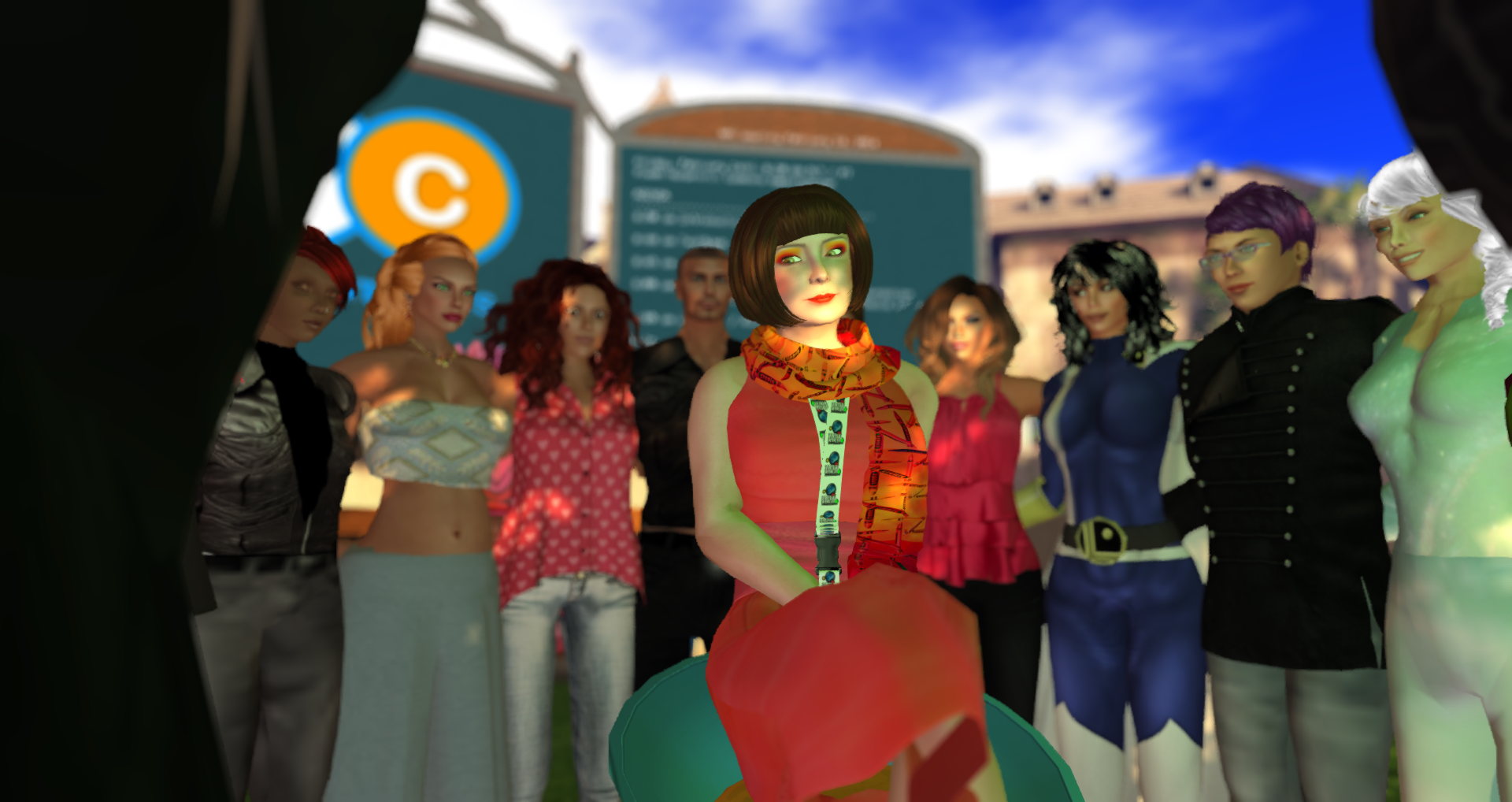
The Museum of Virtual Media for the March 1st NonProfit Commons Meeting

This Friday, March 1st, Nonprofit Commons is happy to feature Liz Dorland (Chimera Cosmos) and Adriana Sanchez (Adrianne Lexico) who will discuss the theory and process behind the creation of the “Museum of Virtual Media”, a Second Life sim built collaboratively by their University of Washington class in the spring of 2012. 


The museum is inspired by “Infinite Reality”, a book on virtual worlds technology and education written by Jim Blascovich and Jeremy Bailenson and takes participants through the evolution of media from ancient cave paintings into the future. Each exhibit in the museum applies different 3D instructional design methodologies including storytelling, gaming and learning archetypes to stimulate learning through immersive experiences, exploration, tours, active participation and knowledge creation.


Immediately following the meeting, Chimera Cosmos and Adrianne Lexico will guide those avatars interested through a tour of different portions of the Museum of Virtual Media exhibits. 

About the book “Infinite Reality” that inspired the museum:

How achievable are the virtual experiences seen in The Matrix, Tron, and James Cameron’s Avatar? Do our brains know where “reality” ends and “virtual” begins? In Infinite Reality, professors Jim Blascovich and Jeremy Bailenson, two pioneering experts in the field of virtual reality, reveal how the human brain behaves in virtual environments and examine where radical new developments in digital technology will lead us in five, fifty, and five hundred years.


Bios:

Adriana Sanchez (Adrianne Lexico in SL) holds a Certificate in Virtual Worlds from the University of Washington. She has been an EduNation Resident since 2010. She works at The Digital Trainer. Over 20 years’ experience teaching English and Spanish for Specific Purposes to adults in multinational companies. Currently training educators on the use of web 2.0 tools, social networks and 3D virtual environments to enhance task-based learning. As an E.learning and Virtual Worlds Specialist, developing instructional and multimedia materials for online courses and providing consultation on how to integrate LMS and 3DVLE for distance education. 


Liz Dorland (Chimera Cosmos in SL) is currently the Communications Director for the Photosynthetic Antenna Research Center based at Washington University. Prior to moving to St. Louis in 2006, she taught general and organic chemistry for over 35 years, including 21 years in the Maricopa County Community College District in Arizona. She reviews frequently for the National Science Foundation and was a program officer in the NSF Division of Undergraduate Education, Directorate of Education and Human Resources (2003-2004). Areas of expertise include immersive virtual environments, social media, faculty use of technology, and research-based applications of visualization and history/philosophy of science in teaching. In July 2011, Liz was co-chair of the Gordon Research Conference on Visualization in Science and Education and is currently working with that community to produce an online report on lessons learned and recommendations for future research on visualization and learning. 


Join us in Second Life!


Nonprofit Commons Weekly Meeting

Friday, March 1st, 8:30 AM SLT / PST

Plush Nonprofit Commons Amphitheater

http://bit.ly/NPCinSL 


AGENDA

  • 8:30 am Introductions
  • 8:40 am TechSoup Announcements
  • 8:45 am Mentors Central
  • 8:55 am Liz Dorland (Chimera Cosmos) and Adriana Sanchez (Adrianne Lexico): The Museum of Virtual Media
  • 9:30 am Open Mic / Announcements
  • 9:45 am Guided Tour of the Museum of VIrtual Media


http://nonprofitcommons.org


The mission of the Nonprofit Commons in Second Life is to create a community for nonprofits to explore and learn about virtual worlds, foster connections, and discover the many ways in which nonprofits might utilize the unique environment of Second Life to achieve their missions.

Written by: Rhiannon Chatnoir